
Interview: The Kitchen and the Recipe
Part 2 of my interview with director Andrew Chaplin. This time we shift a little more technical; discussing on coverage, editing, lighting, and the mechanics of making British TV comedy.

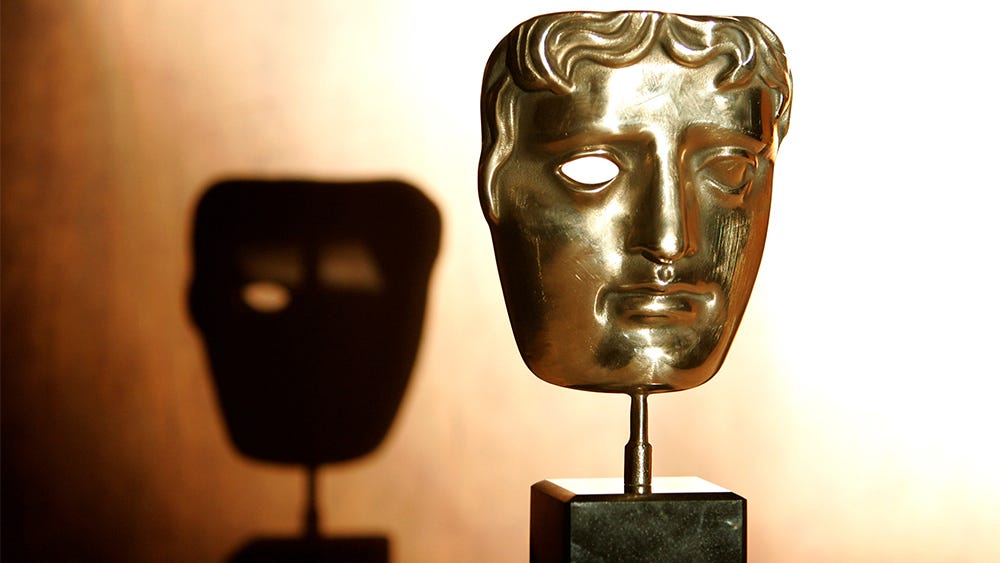
The second part of my interview with director Andrew Chaplin discussing on coverage, editing, lighting, and the mechanics of making British comedy.
This is an edited transcript. Part one, on trust, collaboration, and the psychology of directing comedy, is here.
THE AESTHETIC OF COMEDY
MDT
What do you feel your priorities are? Some people care deeply about production design, or the camera and lighting. Where is your focus?
CHAPPERS
Comedy wasn’t known... and is less so now, but wasn’t known... for being well-shot. The great comedies are not known for being well-shot. The main thing is: is it funny? Comedy lives and dies on whether you laugh at it. If you don’t find it funny, then you haven’t done your job.
It’s very hard to know what people find funny. You kind of have to make the thing that you think is right and hope that’s why other people will find it funny too. Your instinct grows as you do it.
But I’ve always cared about the aesthetic. I know of people who are like: “I don’t care where the camera goes, I don’t care how it’s lit, I don’t care what they’re wearing, as long as it’s funny.” And that’s a completely justified mindset if the show’s funny. But I... especially with raging imposter syndrome... am going: “Who am I to say to all these people schooled in crafting jokes whether they’re right or wrong?” I wanted to add another element to my game. I wanted it to feel a bit more thought-about and crafted in terms of how a director might operate outside of comedy.
So in picking projects, I’ve tried to do stuff that visually feels quite interesting or has something a bit different to it. I’ve had numerous scripts over the years that are a brilliant script, but it’s set in a classroom and there’s very little you can do with that visually. Whereas you can get scripts where it’s more like world-building, or set in a really interesting, weird space, and you can bring a lot more visual flair to it.
MDT
When you talk about bringing visual flair: are you thinking about camera position, production design, lighting? Are you operating the camera?
CHAPPERS
I don’t operate. I used to, in short form, just because the economics sometimes make it easier to film yourself. But yeah, I care a lot about production design and stuff feeling cohesive. So I’m quite concerned with costume colours sitting within the set and the location you’re in. Style-wise, if I’ve got a good designer in place, I’m very much: “This is the world I think we’re in. I’m happy for you to go and think about it and tell me what you want.” Style-wise I’m quite laid-back. Colour-wise I’m much more interested.
Camera-wise... again, just because of my training and the way I came up, I’m very aware of lens choice, what certain lenses do and don’t do, movement, all that kind of stuff. I do think about that.
And that goes back to what I was saying right at the beginning: the craft of telling jokes. Something can be funny or not funny depending on the way you shoot it. You can make it ten per cent funnier by the way you film it.
MDT
The first thing I noticed on Alma’s Not Normal was the use of colour. What were you going for?
CHAPPERS
It’s set in Bolton, which is a northern, de-industrialised city. I don’t know if you’re aware of the phrase over here. There’s a phrase called “It’s grim up north.” It’s a very snobby thing. There’s a real sense that working-class northern is impoverished, it’s grey, it’s bleak, it’s shit, it’s poor. Of course there is a side to that which is true, like anywhere. In Bolton there are some amazing buildings, but there’s also a lot of, you know... The high street is quite bleak.
It was a very conscious choice, Sophie, who plays Alma, and I, to not make this what we called “poverty porn.” We didn’t want to say to the viewer: “Hey, look at this, look how shit this is,” because it wasn’t about that. Sophie and I talked a lot about the feeling we wanted the show to give you. And Alma’s such a glass-half-full, optimistic character. So the world was born out of her worldview.
We filmed the nicer buildings in Bolton, and there’s some great architecture there. We talked a lot about her popping out of her environments. So we put her in a ridiculous pink fur coat and she really sang in those scenes. It was a real choice not to make it bleak. Because also the subject matter of that show is: she’s a prostitute, her mum’s a heroin addict. When you explained the show to anyone when I first got the job, you’d finish and everyone would follow up with: “And that’s a comedy, is it?” And you’d be like: “Yeah, I know it sounds like it’s not, but it really is.”
So we wanted the world to feel fun and uplifting. That use of colour was totally conscious.
And in a geeky way, I love that. That’s the director informing choices, collaborating with the team, but bringing a style to it. It’s nothing revolutionary or never-been-done-before, but it definitely gave that show a feel.
COVERAGE, TAKES AND READING PERFORMANCES
MDT
How many takes do you tend to do?
CHAPPERS
I would generally say on average it’s probably three takes. It depends what the function of the shot is. If it’s a wide to just get the shape of the scene, I might do that once. I might top and tail the scene: do the top and the end, but skip everything in between because I know it won’t play for the rest of it. Performance-wise, it’s probably about three on average. But that can change. It can be less, it can be more, depending on time, depending on whether we’re missing it.
Actors often feel like they have to have a perfect take from the first word to the last word. And actually as a director you’re banking things. “That first line was so funny on the last take, so I’ve got that.” Then you’re looking for the second line and the third line on the next take. And the actor at the end of that take might go, “Oh no, I messed up at the beginning,” and in your head you’re going: “Yeah, but we got it last time, so it’s fine.”
MDT
I’m always surprised that even experienced actors often don’t really understand editing.
CHAPPERS
I think Miloš Forman the director had quite a nice analogy: on set you’re just pulling lumps of clay out of the cliff, and you’re not creating the beautiful vase until you’re in the edit. So you’re just trying to cherry-pick moments and beats. Broadly speaking, you’re looking for specific moments and lines. And when you’ve got that, you can move on.
MDT
How do you approach setups and coverage?
CHAPPERS
I’ve said it many times over the years. You can be like: “I guarantee this is the way we’re going to cut this scene. We’ll start on a close-up of the bag, cut to you David, cut to me, then a long tracking shot to end the scene. That’s how it’s going to be cut.” And you might shoot it exactly like that. Then you get into the edit and go: yeah, it’s too long, or the performance doesn’t work on it, or it’s stronger just to play it on that tracking shot. Despite what you conceived... despite the imaginary Kubrick or Spielberg in you going, “No, it’s conceived as this tracking shot and that is exactly how it’s going to be”... you get to the edit and: yeah. It needs something else.
So you do generally need options. But I try to think of the moments. When I look at a scene, I think: yeah, this bit would play really well on a two-shot. Because on a two-shot, the physicality of two people sitting on it without cutting, actually it’s more awkward in a good way. You feel the awkwardness more.
But you do also want a few more options, particularly if you’re working to a time frame. Sometimes you need the ability to come out of the scene earlier, or lose a line of dialogue because it doesn’t make sense now that you’ve dropped the scene before. If you’re tied to just one shot, that’s very restrictive.
MDT
Are you going in with storyboards, a shot list, or are you more about improvising blocking on set?
CHAPPERS
More action-based sequences I’d storyboard. Or if it’s an advert I’d storyboard, because that’s what clients need to see.
Directing is so much in the prep. You want to have run it in your head enough that when you’re on set you go: that’s the main plan. My main plan is four angles, and I’ll have pre-blocked it in my head. Like, “I think you should stand up when you feel frustrated in the scene.” Whatever. But then when you get to set, you’ve got the version in your head, the version from talking to the actors and rehearsing it, and then you’ve got the version on the day. And you kind of... re-camera-angle it. That’s not a phrase! Reblock it a bit.
I do that all off an app on my iPad. Shot Designer. It’s like a 2D bird’s-eye-view camera plan. So I’ll plot a floor plan: there’s a house, characters A, B, C and D, they’re going to stand here. A will move to B, B will move to C. That’s the scene. Then: how do I want to shoot that? I’ll have one angle here to see characters A and B, another angle to see characters C and D. They cross over so I need a third angle. Then it rehearses differently and you go: actually I don’t need shot three, take that out.
Then when you’re on set I’ll have a viewfinder on an app like Artemis, and you kind of go: yep, this shot will be 50mm, 35, 26, whatever. You work that out when you’re there.
MDT
Do you tell the actors in advance, or do you let them do their thing on set first?
CHAPPERS
I tend not to tell them. You want to give them a bit of autonomy. Sometimes you hear the phrase meat puppets used—
MDT
Yes, there’s a famous Hitchcock quote - I think you can see it on YouTube - he was being interviewed on some chat show next to a famous actress and the host puts him on the spot and says: “I heard that you said actors cattle.” And he looks horribly offended and says in his plummy English voice: “No! No! I didn’t say anything like that. I said actors should be treated like cattle.” I think the follow up is the lead actress on a film brought a real herd of cows to set.
CHAPPERS
No actor wants to come on set and feel like: “You stand there, you stand there, you say the words like this, off you go.” They want to feel like they have ownership. And as they should. There is a bit of a dance. I’m often like: “Yeah, it’s just a suggestion, but why don’t you start here? Let’s see how it plays. If it doesn’t feel right, we can change it.” Rather than: “You have to stand here and say this.”
THE EDIT
MDT
Once you’re in the edit, how hands-on are you?
CHAPPERS
I’ll go in most days, I think. You have that version in your head. “Oh, okay, this shot was for this moment. I conceived that we’re gonna start the scene on a close-up and cut wide for the reveal because that’s a funny way of doing it.” And if you haven’t relayed that to the editor, you get in and they’ve cut a different version, and some of it works and some of it doesn’t, and you end up really blowing the scene apart anyway and starting again.
MDT
Are you flying the Avid yourself, picking specific takes, or do you give the editor broad notes on how you’d like to construct it and leave them alone?
CHAPPERS
When you’re filming it’s so full-on, and if I had the time I’d probably do that. But in my head, it’s going to change anyway. In the end it’s going to be nothing like the editor’s first cut. So I just sort of go: well, let’s just let that version exist. Ultimately in three weeks it’s going to look completely different anyway. It’s about conserving time and energy.
MDT
I think the big advantage of an editor - even if you are planning on cutting yourself - is that you have a second pair of eyes that isn’t on set and is insulated from the frustrations and effort. Shots can often be used for things weren’t intended for, and even if you’re good at it, it can be harder to see that if you know how they were shot. Isolated editors have a cleaner view of the image. The editor just works with what they have not what they want to have. Ang Lee had a cooking analogy similar to Forman. The script is like the recipe. You spend a lot of time coming up with this perfect recipe for Tomato soup. Then when you go out to shoot, you go into the supermarket to pick up everything the supermarket is out of tomatoes. So you get some peppers instead, and you pick up other things that look good and could be useful. Then you bring it back into the edit suite and start cooking. Except the recipe is for tomato soup and you’ve got no tomatoes. So you’ve got to make pepper soup.
CHAPPERS
Pepper soup. Yeah, exactly. That’s so true. And I think having a really solid understanding of editing is crucial. I almost think if I were the dark overlord of film and TV and oversaw everything, I would make every person who wants to work in the industry spend a month in an edit suite before they do anything else. Because it explains so much of what is and isn’t important. Once you’re actually in that kitchen making the thing, you go: “Oh, this is how it’s made”.
The editor works a day behind the main shoot. So if you start filming on Monday, they’ll start cutting on Tuesday. They get the rushes from the previous day. By the end of the week on something like an hour-long show, you might get a cut of the scenes from that week, just to see how they’re hanging.
And that would basically be the episode — except in British comedy, because of budget constraints, you don’t shoot episodically. You shoot according to location, across the series.
MDT
You’re not shooting episodically?
CHAPPERS
In British comedy, because of budget constraints, you don’t shoot episodically. You shoot according to location, across the series.
MDT
Across the whole series? I didn’t know that. It makes sense, but that is another layer of difficulty.
CHAPPERS
Yeah. So that’s another head-scramble. The dream would be: you shoot episode one, then episode two, and so on through to six. But the cost of that means you’d have to visit all those locations in story order and then revisit them the next week. Whereas if you group, you go to Alma’s flat and shoot all the scenes from all the episodes in one go.
And Alma was entirely on location, so you end up grouping. And that’s three hours of screen time across six episodes. So that’s a big part of the job: making sure, when you talk to an actor, you’re placing them at the right point in the story’s emotional arc. If you’re shooting scene four of episode four, you have to make sure they’re emotionally sitting in the right place on the chart. Otherwise it’s going to feel wildly inconsistent.
MDT
Bob Reitano who cut Sleepless in Seattle said that’s exactly where you can tell good directors from bad directors in the rushes. He’d look at a couple of scenes to see if the performance and tone shifts between scenes, and then he’d know if it’s going to be a miserable twelve weeks or if it’s actually going to work.
CHAPPERS
It’s a really big thing. Because it’s the most simple thing in the finished cut: you’re watching it in a linear way. It can be a small thing, but then you get into the edit and you’re like: yeah, the emotion doesn’t quite track. So you’re going: could we move this scene earlier? Does it still work? If we took this line out, could it go earlier? There’s always a fix. But you obviously want to honour the scripted version, while being open-minded about the finished version once you’re making your recipe in the kitchen.
THE FULL MONTY; BUDGET, PACE AND LIGHTING
MDT
The Full Monty brought a bigger budget and bigger crew, I assume. More toys, more takes, more setups?
CHAPPERS
To give you a sense. Alma, the whole series, was ballpark one-point-eight, two million pounds. The Full Monty was 28 million or so. A big difference. A lot of that went to the cast, but yeah, the expectation is different.
But the process was, honestly... with some nuance and differences... broadly the same. I wasn’t doing loads more takes. Because I sort of think: you hear things about Fincher doing 48 takes. You go through pain and boredom and finally get to the thing you need. But anything I’ve done, we just don’t have that luxury of time. And it’s about managing energy. If you’re making anyone do anything nine times, invariably after saying something nine times people start to think “What else do you want?”“
MDT
Did the larger crew slow things down?
CHAPPERS
It does slow things down, definitely. The DP I worked with was brilliant, but a lot more old-school in mindset. Much slower. And when you start grinding down, things start taking ages and you lose a bit of the enthusiasm. As a director you have some say over that. In comedy especially, keeping the pace up really helps.
The hero location was this greasy-spoon café. We’d talked long and hard about building it as a set or doing it on location, but there were so many entrances and exits, and it just felt different cheating it, because most of those places have big windows looking out to the street. There’s a certain aesthetic to them.
But the DP put up these old-school tungsten lights everywhere. It became the biggest sweat box. And it was the height of summer. Everyone just melting. And I was like: “Tony, do you think you could turn a few of those off just while we’re not shooting?” He was like: “No.” It’s the quality of the bulbs and all that.
MDT
He was shooting bright and then bringing it down?
CHAPPERS
Yes. It did look great. For something that wasn’t meant to be too glossy, he made reality look nice. But some of the side effects... it’s a choice: is this worth really pissing off everyone? Because they’re so unbelievably hot in this café for two and a half weeks.
MDT
Was The Full Monty the only one that used tungsten?
CHAPPERS
Yeah. And again, that’s mainly a budget constraint thing. And also locations; sometimes you go to a bigger location, a church, a warehouse, there’s more space to light. Night exteriors: is it helium balloons and blimps, or are you doing it more creatively? It really depends. I would say on most jobs you get your truck of lights and that’s it for the shoot. Every now and again you bring in a special light if you need more coverage. But nine out of ten times it’s been HMIs, LEDs, mats, all that kind of stuff. China ball lanterns, soft lighting. It allows you to move faster. And in comedy that really helps.
INDUSTRIAL CONSIDERATIONS
MDT
What’s the commissioning process like from your end?
CHAPPERS
It depends. On the Leonard and Hungry Paul, I was attached at the development, first-script stage. I was packaged with the script: “We’ve got this guy directing it, this is the script, these are the actors we’re thinking of.” So I was attached very early on.
On something like Alma, it was just an interview. I went in and met Sophie; they’d probably have met three or four other directors. And really that just becomes a personality test, a chemistry test. I’m going to spend three months, six months, many years with somebody.
And with more experience under my belt, you do realise: if you’re right for the job and you get it, it’s sort of meant to be. Not in a fatalistic way, but you’re either on the same page or you’re not. With Sophie it was so straightforward. “I completely get what you want. You completely get what I could bring to this.” Nothing felt forced.
And I think on paper, having a man direct in the current climate what is a very female-led story... I’m not the obvious choice. But I think our chemistry would have been the thing that got me the job, rather than anything else.
MDT
Does the broadcaster materially change how you work?
CHAPPERS
Broadly, no. There are different cultures at different broadcasters and it all hooks on the personnel, the people you’re dealing with. Some channels have a culture of giving you hundreds of notes. Other places are a lot more: “We’ll chip in, but we trust you.” The BBC are pretty good, actually, going: “You do what you think, and we’ll chip in.” And generally they’re good broadcasters to work for because, whilst they don’t have deep pockets, their instincts are generally pretty good.
MDT
You do see things like John Cleese talking about how you’d never get Monty Python made these days because the BBC wouldn’t take those kinds of risks. “We were given money, we went off, we shot and nobody bothered us.”
CHAPPERS
I think might be fair. I mean, John Cleese is a grumpy old man! But I think... With channels, sometimes they’re totally on board with it. But when you deliver something in the edit process, it’s not what they thought it would be, because things always change. Then you hope they don’t try and force it into something else.
I did that show last year... Leonard and Hungry Paul. It’s an adaptation of an Irish novel called . It’s a really gentle, sweet story. And the pace of it is really slow and gentle, which comedy is not known for. We took a very deliberate decision to mirror what the book was on screen. So it was much slower, meandering. Funny, but makes you smile rather than belly laugh. The brief I was giving a lot of my heads of department was: “I want this show to be like a hug of a show. A hug of a half-hour.”
And the BBC... in the first episode there’s an opening montage that brings you up to date with the hero character. And it ends with the mum dying. So it’s bittersweet. The BBC, on that first viewing, were like: “It’s not very funny.” And you’re like: “Well, it’s not really meant to be that funny. It’s meant to make you smile and bring you into the world.”. “But there are no gags in it!” It’s not written that way. And they were like: “Can we not get to the gags sooner?”
And you’re like: “I think fundamentally you’ve misunderstood what this first three-and-a-half minutes is doing.” We were in the edit going: I think they’ve misunderstood this whole thing. Because it’s such a tonal, world-building little moment, all scored, a really sweet little thing. And my heart sank when those notes came in.
Thankfully we kind of went: let’s just ignore that note for now. We answered some of the other notes, and that one sort of fell by the wayside, which is quite unusual. But thank God. And the show ended up being exactly the thing we wanted to make. The biggest compliment was when we did the screening and the author was there. He said it was perfect. He was like: “If no one else watches this, I’m so chuffed that you did this, because this is your story we’re bringing to life.”
MDT
Do budgets play into that?
CHAPPERS
In comedy particularly, you can’t have big-scale events with loads of extras. The cost is prohibitive. I’m talking about traditional broadcasters; with the streamers it’s different, but even then...
You really feel the constraints here. On every job I’ve done, except The Full Monty, it’s almost like a miracle you’ve got the thing shot at all, let alone that it’s any good. It’s so ambitious for the time and money you have. You spend most of the time going: we need this long to shoot it and we’ve got this long. So you creatively work out ways. Double up locations here, change this, move that, lose that character because they’re too expensive. It’s such a jigsaw puzzle.
But that’s not to say the end product is bad. Far from it. I think constraints are actually a really, really good thing. Limitless money and time: does it make it any better? Sometimes. But mainly not. It forces you to think differently. And often when you do that, you go: actually, that’s probably better than what we had in the first place.
MDT
Yes, I think problem solving constraints in itself leads to improvement. Iteration. That’s one reason I think even bad notes can sometimes be useful. Maybe that’s just a coping mechanism! But it’s a challenge to iterate under new constraints. Sometimes you get interesting ideas from that. Sometimes it’s just terrible, of course, but being forced to iterate under unexpected constraints often reveals more interesting ideas that connect in unusual ways than if you had just got your way the first time.
So, you’ve done what you set out to do a decade ago. What’s next?
CHAPPERS
I think, as broad as this sounds, the desire to just keep making good stuff is definitely still there. I would love to make something mainstream and successful. That feels like a real challenge. In the way that Ted Lasso really nailed it in terms of broad appeal. It’s really hard to make something that appeals almost universally, and I think that’s a really exciting challenge.
And a bit more ownership of writing. I’m collaborating with a writer at the moment where we’re building up ideas. I find so hard to do when you’re in the throes of making something. I’m so immersed in the world when I’m doing a project that I just don’t have the headspace to invest in and finish anything else.
The last job, the Irish one, was more a gentle drama that makes you smile. And I really liked that tone. As I said right at the top: I think humour should be in most things. That’s life. Even in the bleakest situations you still find time to find things funny. The times you think you shouldn’t laugh, you do end up laughing. And I think that’s such an interesting area to be in.
Andrew Chaplin’s work can be found at andrewchaplin.co.uk.